2026 Automotive Connector Trends: High-Voltage, High-Speed, Miniaturization and Intelligence
Four transformative forces are reshaping the automotive connector industry in 2026: the mainstream adoption of 800V high-voltage platforms, explosive growth in high-speed data transmission demands, miniaturization and functional integration, and the emergence of intelligent connectors with sensing capabilities.
2026 Automotive Connector Trends: High-Voltage, High-Speed, Miniaturization and Intelligence
In the era of software-defined vehicles and zone-based architecture, connectors are no longer silent auxiliary components hidden in vehicle corners. As the vehicle's neural network, connectors are undergoing a profound transformation — evolving from passive connections to active, intelligent systems. These four major trends are defining the future of automotive connectivity.
Trend One: High-Voltage — 800V Platform Goes Mainstream
The 800V high-voltage platform has become the standard configuration for mainstream electric vehicles. In 2024, 800V models already accounted for 28% of EV sales, and this figure is expected to reach 65% by 2030. The global automotive high-voltage connector market was valued at $928 million in 2025 and is projected to reach $1.624 billion by 2032.
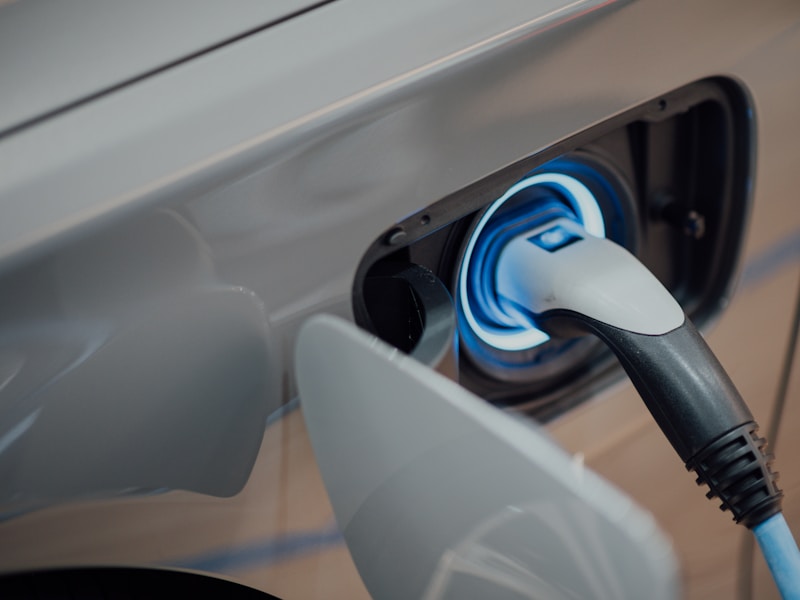
The voltage increase is not a simple parameter adjustment. Upgrading from 400V to 800V nearly doubles the required creepage distances. Glass-reinforced PBT, PA66, PPS, and PA6T are widely adopted, requiring Comparative Tracking Index (CTI) ratings of Class A 600V. Liquid cooling technology is expanding from battery packs to the connectors themselves — in ultra-fast charging scenarios, liquid-cooled high-voltage connectors offer up to three times better heat dissipation efficiency, with their market share expected to exceed 70%.
The 800V transition also demands enhanced safety features. Active temperature monitoring, overvoltage protection, and improved insulation are becoming standard requirements. Connector manufacturers are integrating these safety functions directly into the connector design rather than relying on external protection circuits.
Trend Two: High-Speed — The Information Arteries of Autonomous Driving
LiDAR, radar, and high-resolution cameras pour massive amounts of data into the vehicle network. The data transmission capability of connectors directly determines the responsiveness and reliability of autonomous driving systems. Automotive Ethernet is rapidly replacing the traditional CAN/LIN architecture, with speeds climbing from 100BASE-T1 to 1000BASE-T1 and beyond.

High-speed connectors face unique challenges: impedance control, crosstalk suppression, and EMI shielding. New connector designs employ mixed architecture — integrating low-voltage connections with high-speed, high-frequency connections within the same cavity, improving pin layout efficiency by nearly 20% within the same footprint. Shielded twisted pair (STP) designs with optimized grounding paths are becoming standard for data-critical applications.
The evolution toward 10Gbps automotive Ethernet and beyond requires connector manufacturers to possess not only mechanical and electrical expertise but also signal integrity knowledge. Simulation-driven design, combined with real-world validation in electromagnetic laboratories, is now essential for developing high-speed automotive connectors.
Trend Three: Miniaturization and Functional Integration
The traditional boundary between power connectors and signal connectors is blurring. New generation connector systems achieve weight reduction of up to 78%, terminal pitch reduction of 30%, and crimp length reduction of 55%, while passing the LV214 standard SG2 vibration level test.
Modular mixed systems integrate signal, power, and high-speed data connections into a single connector assembly, reducing PCB occupancy by up to 40%. This integration not only saves space but also improves system reliability by eliminating intermediate connections and reducing potential failure points.
Miniaturization extends beyond the connector itself. The latest wire terminal technology allows wire cross-sections as small as 0.15mm² for signal applications, enabling further weight reduction in the vehicle harness. Combined with advanced aluminum conductor technology, this creates unprecedented opportunities for system-level optimization.
Trend Four: Intelligence — Connectors That Can Sense and Respond
The most disruptive trend of 2026 is the emergence of connectors with sensing capabilities. Intelligent connectors with condition monitoring and fault prediction functions are gradually being applied in new energy vehicles, using data feedback to optimize equipment operating efficiency.
Advanced intelligent connector systems can monitor temperature, current, voltage, contact resistance, and even vibration in real-time. When combined with edge computing capabilities, these connectors can predict potential failures before they occur, reducing maintenance costs and improving vehicle safety. The response time for fault warnings has been reduced to under 80 milliseconds, enabling rapid corrective action.
Looking ahead, intelligent connectors will become active participants in the vehicle's health management system. They will continuously communicate status data to the onboard computer, enabling predictive maintenance and real-time system optimization. This represents a fundamental shift in the connector's role — from a passive component to an active data source.
The Convergence of Trends
These four trends do not exist in isolation — they reinforce each other. High voltage requires better thermal management, high speed needs miniaturized integration, and intelligence enhances all other capabilities. The connector industry is being completely redefined, and companies that embrace these changes will lead the next generation of vehicle architecture.
For procurement professionals and engineers, staying ahead of these trends means working with partners who understand the interconnected nature of modern automotive connector requirements. The future belongs to those who can integrate materials science, electrical engineering, and data technology into a holistic connector solution.